
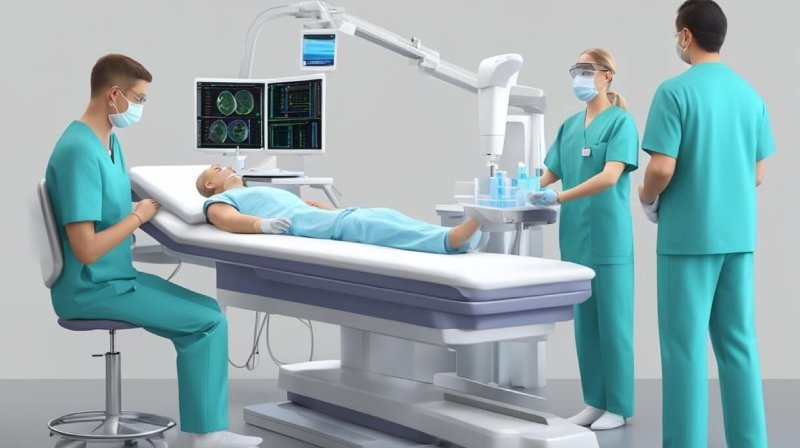
Healthcare is built on highly specialized knowledge, yet its effectiveness often depends on how clearly that knowledge is communicated. Medical illustrations and animations have become essential tools for bridging the gap between complex scientific information and human understanding. By transforming intricate medical concepts into structured visual narratives, they support education, improve patient communication, and enhance research dissemination.
The Strategic Role of Medical Illustration
Medical illustration https://scientific-illustrations.com/portfolio/medical-illustrations is a discipline that prioritizes clarity, accuracy, and intent. Unlike photography, which captures all visible details, illustrations are selective. They emphasize relevant structures and eliminate distractions, making it easier to focus on key anatomical or pathological features.
For example, an illustration of the nervous system can isolate neural pathways while minimizing surrounding tissues, allowing learners to understand signal transmission more clearly. Similarly, surgical illustrations can present procedural steps in a simplified sequence, helping practitioners visualize complex interventions before performing them.
Medical illustrations are widely used in textbooks, clinical guides, research publications, and patient education materials. They function as visual explanations that condense large volumes of information into intuitive formats. This is especially valuable in medical training, where students must quickly grasp complex spatial relationships and functional systems.
Medical Animations: Visualizing Dynamic Processes
While illustrations provide clarity in static form, medical animations extend this capability by introducing motion. Many physiological and pathological processes are dynamic, involving sequences of interactions over time. Animations allow viewers to observe these processes step by step.
For instance, an animation can demonstrate how blood flows through the heart, how neurons transmit electrical signals, or how a drug interacts with cellular receptors. These visualizations reveal cause-and-effect relationships that are difficult to convey through text alone.
In clinical practice, animations https://scientific-illustrations.com/portfolio/animation are increasingly used to explain treatment procedures to patients. A patient preparing for surgery can watch an animation that outlines each stage of the operation, helping reduce uncertainty and improve comprehension. This leads to more informed decision-making and stronger trust in healthcare providers.
In the pharmaceutical sector, animations are essential for demonstrating mechanisms of action. They translate complex biochemical interactions into clear visual sequences, making it easier for healthcare professionals and stakeholders to understand how therapies work.
Applications Across the Healthcare Ecosystem
Medical illustrations and animations support a wide range of functions across healthcare:
Education and Training
Medical schools and training programs rely heavily on visual materials to teach anatomy, physiology, and pathology. Animated simulations help students understand surgical techniques and biological processes before encountering them in real-life scenarios.
Clinical Communication
Doctors use visual aids to explain diagnoses, treatment options, and procedures. Clear visuals help patients better understand their conditions and participate in decision-making.
Research and Scientific Communication
Researchers use diagrams, graphical abstracts, and animations to present findings in a concise and accessible way. Visual communication helps bridge gaps between disciplines and increases the impact of scientific work.
Pharmaceutical and Biotechnology Industries
Visualizations are used to explain drug development, clinical pathways, and therapeutic mechanisms. These tools are essential for communication with healthcare professionals, regulators, and investors.
Public Health and Awareness
During public health campaigns, illustrations and animations help communicate critical information about disease prevention, vaccination, and treatment in a clear and engaging manner.
Technological Advancements in Medical Visualization
The field of medical visualization is evolving rapidly due to technological innovation. Three-dimensional modeling enables the creation of highly detailed anatomical structures that can be explored from multiple angles. These models provide a deeper understanding of spatial relationships within the body.
Virtual reality (VR) and augmented reality (AR) technologies are transforming medical education and training. Students can interact with immersive simulations, practicing procedures in controlled environments that mimic real-world conditions. This enhances both confidence and competence.
Artificial intelligence is also beginning to influence the field by assisting in the generation of anatomical models from medical imaging data. This integration of data and visualization accelerates production workflows and improves accuracy.
Interactive digital platforms further enhance learning by allowing users to manipulate models, explore different layers of anatomy, and observe physiological processes in real time.
The Importance of Interdisciplinary Collaboration
The creation of effective medical illustrations and animations requires close collaboration between healthcare professionals and visual experts. Medical specialists provide scientific accuracy, while illustrators and animators apply design principles that make information accessible and engaging.
This collaboration ensures that visuals are not only correct but also meaningful to the intended audience. The goal is to translate technical knowledge into visual formats that are easy to interpret without oversimplifying critical details.
Conclusion
Medical illustrations and animations are fundamental to modern healthcare communication. They transform complex medical information into visual formats that enhance understanding, improve education, and support patient care. As technology continues to advance, these tools will become even more powerful, enabling new ways of visualizing and communicating medical knowledge.
By combining precision with visual storytelling, medical illustrations and animations help ensure that healthcare information is not only accurate but also accessible, empowering professionals and patients alike. At Disquantified.com, we believe that true creativity starts with the heart. And when shared with purpose, it can leave a lasting mark.