
You know that sinking feeling when you’re washing the dishes and realize the water isn’t disappearing down the drain? Instead, it’s slowly rising around the plates, leaving you wondering what on earth has got stuck in the pipes. It’s frustrating, particularly when you’ve got better things to do than deal with a blocked sink.
Fortunately, a clogged drain doesn’t always mean you’re facing a major plumbing problem. Depending on what’s causing the blockage, there are a few straightforward methods that might get things moving again. The trick is knowing what to try and when it’s time to leave the job to someone with more experience.
- Start With Hot Water and Dish Soap
Sometimes, the simplest solution is worth trying first, particularly if your kitchen sink has become sluggish after weeks of washing greasy dishes.Pouring some dish soap down the drain, followed by hot tap water, may help loosen light grease buildup and encourage water to flow more freely. It’s not a guaranteed solution, especially if the blockage is substantial, but it can be useful for minor problems.
Avoid using boiling water, particularly if you’re unsure what type of pipes you have, as excessive heat can damage certain plumbing materials.If the water still refuses to drain, you’ll probably need to try something a little more hands-on.
- Give the Trusty Plunger a Go
Most people associate plungers with toilets, but they’re also useful for clearing certain sink and bathtub blockages.The key is using the right type. A flat-bottomed cup plunger generally works well for sinks, while toilets require a different design.Add enough water to cover the plunger’s cup, position it firmly over the drain, and use several controlled plunging movements to create suction. If your sink has an overflow opening, covering it can help maintain pressure.However, if you’ve already poured chemical drain cleaner into the sink, don’t attempt plunging, as the chemicals could splash back and cause injury.
- Try a Drain Snake for Stubborn Blockages
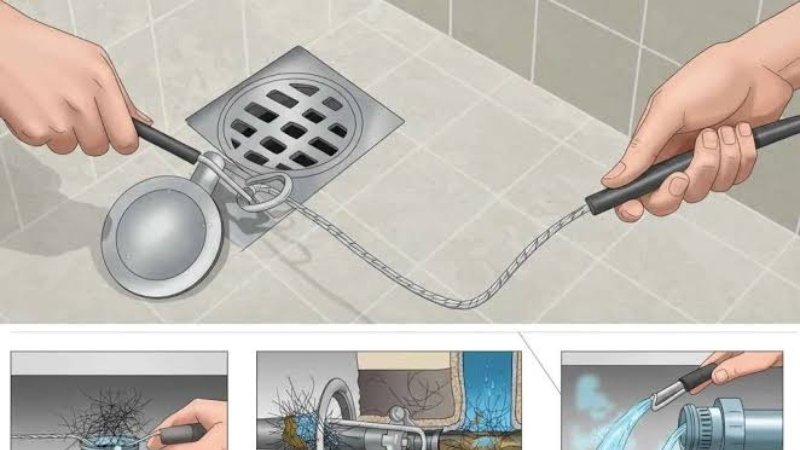
When plunging doesn’t work, the blockage might be sitting farther down the pipe. This is where a drain snake, sometimes called a drain auger, can come in handy.These flexible tools are designed to reach into drains and break up or retrieve obstructions, particularly those caused by accumulated hair and debris.
For minor household blockages, a small manual drain snake may be sufficient. Just be gentle, as forcing the tool through a pipe can damage plumbing or make the problem worse.If you’re dealing with repeated blockages or suspect something deeper in the drainage system, professionals like Dutton Plumbing can help investigate the issue and recommend an appropriate solution.
- Remove and Clean the Sink Stopper
Bathroom sinks are particularly prone to collecting hair, soap residue, and toothpaste buildup around the stopper mechanism.If water is draining slowly, removing the stopper and cleaning away trapped debris might solve the problem without needing any special equipment.
The exact removal process depends on your sink’s design, so check how the mechanism works before pulling anything apart.Once you’ve removed the buildup, rinse the stopper thoroughly and reinstall it correctly. You might be surprised by how much better the water flows afterward.
Know When a Blockage Needs More Attention
While these methods can help with everyday clogs, some drainage problems need professional investigation. If several fixtures are backing up simultaneously, wastewater is returning through another drain, or unpleasant sewage odors are appearing, stop using the affected plumbing and arrange for help.
Nobody enjoys dealing with a clogged drain, but knowing a few practical solutions can make the situation much less stressful. Start with the gentlest method, avoid forcing anything, and recognize when a problem is beyond a simple DIY fix. With a little patience and the right approach, you can often get things flowing smoothly again.