
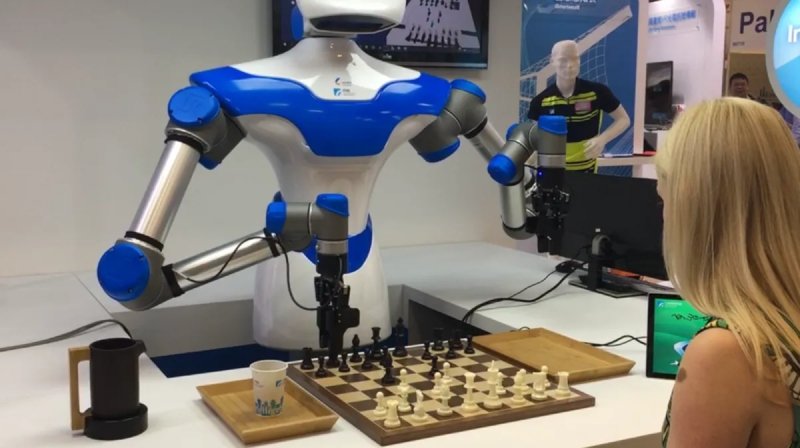
Most amateur players misunderstand what holds their chess back. They assume the problem is knowledge. In many cases, it is not. The problem is decision-making under imperfect conditions. They know basic principles, they recognize familiar tactical patterns, and they may even understand what the right plan should look like. But when the position becomes uncomfortable, they rush, simplify for the wrong reason, or start playing moves that do not match the demands of the board. That is exactly where training against AI bots can be useful.
A strong grandmaster would not claim that bot games are a complete substitute for human competition. They are not. Still, they can be a highly practical training tool when used correctly. A well-chosen bot gives the player repeated access to one of the hardest parts of chess improvement – making decisions without emotional noise, without random distractions, and without the chaos that often comes from low-quality online games. The bot does not complain, does not stall, and does not distort the training goal. It simply presents positions and punishes weak choices with consistency.
That consistency matters. Human opponents below master level are often erratic. They may miss simple tactical shots, choose dubious plans, or collapse in positions that should still require careful technique. As a result, a player can win games while making poor decisions throughout. Against an AI bot, even a moderate one, bad habits are often revealed more cleanly. The punishment is not always immediate, but it is reliable. That is valuable for anyone trying to improve thought process rather than just collect wins.
For players who want structured online practice, modern tools such as Endgame AI fit naturally into this kind of work because the real goal is not entertainment alone. The point is to use repeated games to build cleaner judgment, better move selection, and more disciplined evaluation. That is where decision-making starts to improve in a way that transfers to real competition.
AI Bots Expose Weak Choices More Clearly Than Many Human Opponents
One of the biggest obstacles in online chess is false feedback. A player makes a weak move, the opponent fails to react correctly, and the player concludes that the move was acceptable. After enough games like that, bad habits become part of the player’s style. This happens constantly in casual online play. The player attacks too early, neglects development, opens the king, or exchanges into a poor ending, yet escapes the consequences because the opponent lacks precision. Short-term success then hides long-term weakness.
AI bots are useful because they reduce that distortion. They respond more consistently to positional looseness, tactical carelessness, and poor endgame technique. A player who repeatedly makes the same strategic error will often see a similar punishment each time. That repetition is educational. It creates a direct connection between the decision and the outcome. In training, that kind of clarity is more valuable than random success.
From a grandmaster’s point of view, this is one of the main reasons bot games deserve a place in practical study. Improvement becomes faster when the player can trust the feedback. A careless pawn push in front of the king should create danger. A misplaced knight should get squeezed. An inaccurate exchange should lead to a weaker structure. Against humans, these lessons are sometimes delayed or blurred. Against a solid bot, they become visible much sooner.
This helps especially in positions where no immediate tactic decides the issue. Many players can accept that blunders are bad. Fewer understand how a slightly weak move on move fourteen can produce a nearly unplayable middlegame by move twenty-five. Bots are often effective teachers in exactly those positions. They do not need brilliance to expose a mistake. Good technique is enough.
Another benefit is emotional neutrality. Human opponents often provoke bad decisions because players become irritated, overconfident, or impatient. Bot training removes much of that noise and forces the player to engage more directly with the position itself. That makes it easier to evaluate decisions honestly after the game.
Bot Training Improves the Quality of Thought, Not Just Calculation
Many players hear AI bots and think only of tactics. That is too narrow. The real value of playing against bots lies in how they shape thinking habits. Good decision-making in chess depends on several layers at once – evaluating the position correctly, identifying candidate moves, comparing plans, respecting the opponent’s resources, and choosing a move that is both sound and practical. Bot games can strengthen this process because they punish shallow thinking even when no combination is available.
A typical amateur error is not always a missed tactic. Very often it is a lazy assessment. The player assumes the position is better because there is more space, or assumes the attack should continue because the opponent’s king looks exposed, or simplifies because trading feels safe. These decisions are not random. They come from incomplete evaluation. Bots help here because they are less likely than ordinary opponents to cooperate with a mistaken narrative. If the position does not justify aggression, the bot often proves it. If the endgame is worse, the bot usually converts it with enough consistency to make the lesson clear.
This is why serious players often use bots to test whether their thought process is stable. A player may know the right opening ideas in theory, but only bot games reveal whether those ideas survive contact with an unfamiliar position. A player may believe he understands opposite-side castling, but repeated games against stable resistance quickly show whether he knows when to race and when to defend. In that sense, bots are not just opponents. They are filters for poor reasoning.
Useful decision-making habits often become stronger through repeated exposure to the same demands. The player learns to pause before committing to pawn breaks. He learns to ask what the opponent wants rather than focusing only on personal ideas. He learns that many moves which look active are simply weakening. These are not dramatic lessons, but they win games. Strong practical chess is built from hundreds of such choices.
A player using bots well usually becomes better at a few key things:
selecting candidate moves with more discipline
judging when a position requires patience rather than immediate action
Those gains matter because rating growth is often decided not by rare brilliance, but by the steady reduction of poor decisions in normal positions.
AI Bots Are Especially Useful for Practicing Specific Types of Positions
One of the best features of bot training is control. Human games are unpredictable in a way that is useful for competition, but less useful for targeted repetition. A player may want to practice technical endgames, isolated pawn structures, cramped positions as Black, or attacking setups with opposite-side castling. Against human opponents, there is no guarantee those positions will appear often enough to create learning momentum. Against bots, a player can shape training more deliberately.
This is highly practical for adults who do not have endless study time. If a player knows that many recent losses came from poor decisions in simplified positions, then bot games can be directed toward exactly that weakness. If the player struggles with converting an extra pawn, handling IQP middlegames, or staying solid against flank attacks, the training can be arranged around those scenarios. That is much more efficient than waiting for the right lesson to appear by chance.
From a coaching perspective, this is where bots become more than convenient sparring partners. They become repeatable test environments. Repetition matters because good decisions often require the same principle to be recognized across many forms. A player does not really understand active king play, prophylaxis, or correct piece exchanges after seeing them once. He understands them after meeting them again and again under slight variations and learning to respond correctly.
This is also where modern AI chess analysis and chess AI bots complement each other well. The game against the bot creates the problem. The review after the game identifies the decision that failed. Then the next bot game becomes a chance to apply the correction immediately. That loop is one of the most efficient methods available for online improvement because the gap between lesson and repetition becomes much smaller.
For players who want a more organized way to do that kind of work, it makes sense to use a platform where training, review, and structured practice stay connected. Many improving players explore https://endgame.ai/ for exactly this reason – not because a tool can think for them, but because it can help keep training centered on recurring mistakes rather than random study.
Bot Games Help Build Better Decisions Under Time and Practical Pressure
Decision-making in chess is never purely theoretical. It happens under a clock. That is why some players study well but still perform badly in real games. They can explain good moves after the fact, yet fail to find them quickly enough during play. Bot games can help close that gap because they allow repeated practice under controlled time settings without the unpredictability that often makes online training wasteful.
A player can choose a time control that forces decisions at the correct speed. Too much blitz often creates impulsive habits. Too much slow analysis can separate knowledge from practical execution. Bot training sits well between these extremes because it can be repeated under steady conditions. The player gets multiple chances to make similar decisions with similar time pressure and can then compare the quality of thought from one game to the next.
This becomes particularly useful in endings and strategic middlegames. In tactical positions, poor calculation is obvious. In quieter positions, time mismanagement is often more destructive. A player spends too long on one move, enters mild time trouble, and then begins making passive or rushed decisions for the next ten moves. Against a bot, these patterns show up clearly because the resistance remains stable. The player cannot blame randomness. The issue is exposed as a decision-management problem.
A grandmaster would also point out another advantage. Bot games make it easier to practice restraint. Many human online games become emotional contests. Players overpress because the opponent appears weak, or they become careless after gaining an advantage. Bots encourage a more professional approach. The player is rewarded for maintaining structure, improving pieces, and converting edges with discipline. That is exactly the kind of decision-making that supports long-term rating growth.
The Real Benefit Comes Only When Bot Games Are Reviewed Properly
Playing against bots without review is only half useful. The game creates the evidence, but the learning comes afterward. This is where many players fail. They either trust the result too much or focus only on the final blunder. A strong review process looks deeper. It asks where the decision-making started to weaken. Often the decisive mistake is not the move that loses material. It is the earlier move that created a worse version of the position without necessity.
A practical review of bot games should stay simple and honest. The player should first explain the critical moments without assistance. Why was that pawn break chosen? Was the trade made? Why did the player think the king was safe enough to attack? Only after that should outside analysis be used. This order matters because it protects independent thought. If the engine speaks first, the player often stops examining personal reasoning.
The most useful review usually identifies one recurring weakness rather than ten separate details. Perhaps the player pushes pawns too freely around the king. He underestimates the strength of active rooks. Perhaps he rushes exchanges whenever the position becomes tense. Those habits matter far more than a perfect memory of specific engine lines. A player improves when he starts recognizing his own weak decisions before making them.
That is why Why Playing Chess Against AI Bots Can Improve Your Decision-Making is not really a claim about technology alone. It is a claim about training structure. Bots are valuable because they provide stable resistance, repeatable scenarios, and cleaner feedback than many casual human games. But the true improvement comes when those games are used as a disciplined laboratory for thought. When the player combines focused bot practice with honest review, better decisions begin to appear not only against machines, but against human opponents as well. At Disquantified.com, we believe that true creativity starts with the heart. And when shared with purpose, it can leave a lasting mark.