
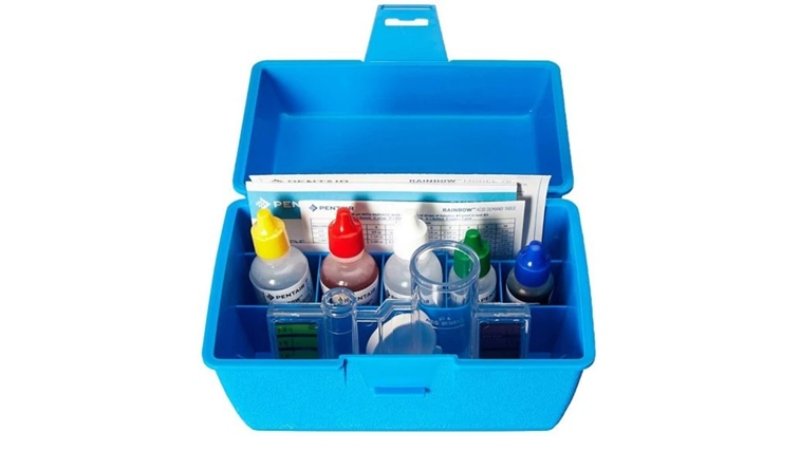
Maintaining the right pH level is an important part of regular pool care. Water that is too acidic or too alkaline will impact swimmer comfort, swimmer clarity, and performance of other pool chemicals. Routine testing helps to detect water chemistry changes and determine when adjustments might be necessary.
It is easy to use a pool pH test kit to check your pool’s pH. Test tablets, test strips, or liquid reagents can be used for testing, depending on the type of kit used. Knowing the proper way to take a water sample and accurately read the results can help make routine pool maintenance easier.
What Does Pool pH Measure?
The pH is a measure of the acidity or alkalinity of the water, ranging from 0 to 14. A reading of 7 is neutral; lower readings are more acidic, and higher readings are more alkaline.
Swimming pool pH levels are often recommended to be kept between 7.2 and 7.8. Maintaining a proper range can facilitate good swimming conditions and allow other aspects of swimming pool maintenance to function as intended.
Since the pH level of your pool can shift over time, it is important that you test your pool regularly, rather than when you notice a problem.
Choose the Right Pool pH Test Kit
Pool water can be tested in a variety of ways, so select a test that will work for the pool maintenance schedule.
Typically, a liquid pool pH testing kit requires taking a water sample and adding a certain amount of testing solution. The resulting color is then matched with a reference chart to determine the level of the pH.
Another convenient alternative is pool pH test strips. Just lay down a strip in the water, as per the instructions and read the color off the scale on the box.
In either case, use the particular instructions provided with the product.
Collect a Proper Water Sample
The method of water sample collection may affect the test result. Do not take water from the surface, as it may not be representative of the whole chemistry of the pool.
Instead, take a sample from below the water level, typically off return jets, chemical feeders, or areas where recently added chemicals may accumulate.
If your kit does call for a clean testing container, use that for the test. Do not touch the inside of the container or get other substances on the sample.
How to Test Pool pH with a Test Kit
Fill the test chamber with the proper amount of pool water, if you are using a liquid test kit. Add the reagent or tablet as indicated. Don’t add too much or too little, as this will impact the comparison of color.
If necessary, stir the sample gently; compare the color of the sample with the pH reference chart. Read the result under appropriate light to accurately compare colors.
Various kits have different color scales, so be sure to use the one that comes with your selected product.
How to Use Pool pH Test Strips
When using pool pH test strips, refer to the instructions prior to testing. Some strips have to be placed in the water for a certain time period, while others have to be removed after a certain time.
Dip the strip as indicated, and remove and allow development time as required. Compare the color of the pH indicator to the color scale.
Do not leave the strip in the water for more than recommended, as this may have an impact on the result.
What to Do with Your pH Reading
After your test you should check your result against the recommended pH range for your pool. If the reading is outside of the desired range, an appropriate adjustment with an appropriate pool chemical may be needed.
Please read the product directions and take into account the size of your pool, current test reading, and recommended dosage.
Once adjusted, let the water circulate and retest following the chemical manufacturer’s instructions. This can be used to see if the water has approached the desired range.
How Often Should You Test Pool pH?
The testing frequency will vary depending on the conditions of the pool, weather, rainfall, source of water, and frequency of chemical additions. It may be beneficial to test more often when use is heavy or during weather conditions that change.
Regular testing can also help you notice gradual changes before they become more difficult to manage.
Final thoughts
You don’t need to be an expert when reading your pool’s pH. There are a few types of pH test kits for swimming pools, including pool pH test strips and a pH test kit. There are a variety of pH test kits for swimming pools, such as pool pH test strips and a pH test kit.
If you can properly collect the samples, use the testing procedures, record your results, and adjust your pool’s water based on the results you get, pool water testing can be a regular part of your pool maintenance. At Disquantified.com, we believe that true creativity starts with the heart, and when shared with purpose, it can leave a lasting mark.