
For decades, the standard blueprint for setting up an industrial facility—whether a chemical processing plant, water treatment facility, or energy generation station—looked remarkably consistent. It was fundamentally a story of “stick-built” construction: raw steel, unshaped pipes, and sensitive instrumentation shipped in loose batches to an open job site. There, an army of field welders, electricians, and civil contractors would spend months, sometimes years, battling harsh weather, logistics bottlenecks, and on-site alignment errors to assemble the puzzle piece by piece.
Today, this legacy approach is hitting an economic and operational wall. Facing tighter project deadlines, volatile labor costs, and increasingly strict regulatory safety thresholds, industrial plant managers are turning to a smarter paradigm.
The industry is undergoing a significant transformation—shifting from chaotic site construction to precision off-site fabrication, turnkey modular systems, and integrated containment architecture.
The Hidden Challenges of Traditional Industrial Construction
To understand why industrial infrastructure is evolving so rapidly, it is important to examine the friction points of conventional engineering:
- Environmental and Weather Volatility: Delicate piping welds and complex electrical wiring performed outdoors can be affected by rain, extreme temperatures, and airborne dust, resulting in quality issues and work stoppages.
- Quality Control Discrepancies: Inspecting welds, conducting non-destructive testing (NDT), and calibrating sensitive flow meters in an active field environment can be more challenging than performing the same work in a dedicated, controlled facility.
- Safety and Labor Overhead: Managing numerous contractor teams simultaneously inside chemical plants, refineries, or other hazardous areas increases safety risks, coordination requirements, and liability.
- Extended Commissioning Downtime: Traditional construction often requires extensive post-assembly troubleshooting. Problems such as improperly seated valves or electrical faults can delay commissioning and interfere with adjacent construction activities.
The Rise of Modular Process Skids
The solution is to move more of the manufacturing process into controlled engineering facilities and deliver fully assembled, self-contained packages.
Imagine building a high-end supercomputer. You would not purchase bare components and attempt to assemble every microscopic part in an uncontrolled environment. Instead, you rely on engineered modules designed to work together.
Modern industrial engineering applies a similar philosophy to fluid and gas management through modular process skids.
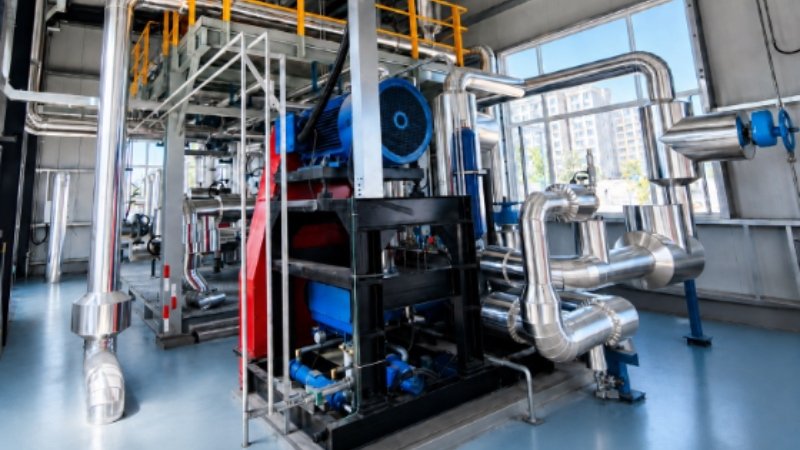
A process skid is essentially an entire chemical or mechanical unit incorporating structural steel frames, pumps, valves, instrumentation arrays, piping manifolds, and electrical enclosures into an integrated, transportable module.
Instead of waiting for the plant building to be completed before installing mechanical lines, the modular unit can be engineered and fabricated concurrently inside an advanced workshop. Once completed, the skid can undergo hydrostatic testing, electrical wiring verification, and factory acceptance testing (FAT) before leaving the factory.
When the unit arrives on-site, installation shifts from a lengthy construction process to a streamlined hook-up operation. The frame is mounted, primary utility and process nozzles are connected, electrical inputs are linked, and commissioning can begin. This concurrent workflow can significantly reduce project delivery timelines.
Why Pressure Vessels Matter
While the structural skeleton and piping frame provide mobility and organization, the operational core of many fluid-handling systems revolves around secure containment.
Industrial processes routinely handle aggressive media, including high-pressure steam, volatile hydrocarbons, and corrosive acids, often under extreme temperatures and pressures. Under these conditions, structural integrity is essential.
This makes certified, code-compliant pressure vessels a critical safety and performance component across modern processing lines.
Unlike standard atmospheric storage tanks, pressure vessels must be carefully calculated, formed, and certified to rigorous international standards such as ASME Section VIII. Key considerations include plate metallurgy, weld seam integrity, nozzle reinforcement, corrosion allowances, and thermal stresses.
When high-integrity containment is designed alongside piping and skid structures, facilities can reduce vibration issues, minimize localized stress concentrations, and improve long-term operational resilience.
Eliminating Vendor Fragmentation
One of the persistent challenges for project engineers is vendor fragmentation. Traditionally, an engineering team might purchase tanks from one manufacturer, structural framing from another fabricator, valves from third-party distributors, and electrical services from separate contractors.
When integration problems emerge during startup—such as misaligned nozzles or footprint mismatches—responsibility can become divided between vendors. This can result in change orders, delays, and project gridlock.
To overcome this challenge, leading enterprises partner with comprehensive fabrication and integration specialists such as Sharp Eagle.
By consolidating precision vessel manufacturing, structural framing, piping spool fabrication, and instrumentation under one engineering operation, single-source providers can offer several advantages.
End-to-End Quality Control
A unified quality assurance system can track material traceability, weld mapping, non-destructive testing, coating specifications, and final inspections throughout the project.
Optimized Equipment Layout
Engineers can package components efficiently within the structural frame while maintaining appropriate maintenance access, ergonomics, and safety clearances.
Turnkey Accountability
From initial 3D CAD/BIM modeling and structural analysis to final testing, a single engineering team remains responsible for the overall integration and performance of the system.
The Future of Industrial Infrastructure
As sectors such as green hydrogen, carbon capture, renewable diesel, and advanced semiconductor water purification continue to expand, demand for fast, modular, and reliable equipment deployment is likely to increase.
Companies that continue relying exclusively on traditional field-welded construction may face unpredictable costs, labor challenges, and longer project schedules. Organizations adopting off-site modular skids and certified containment systems can instead gain greater flexibility, reduce on-site disruption, and strengthen industrial safety.
The future of industrial infrastructure is no longer built piece by piece in the mud. It is increasingly precision-crafted, modularized, tested, and delivered ready for integration. At Disquantified.com, we believe that true creativity starts with the heart. And when shared with purpose, it can leave a lasting mark.