
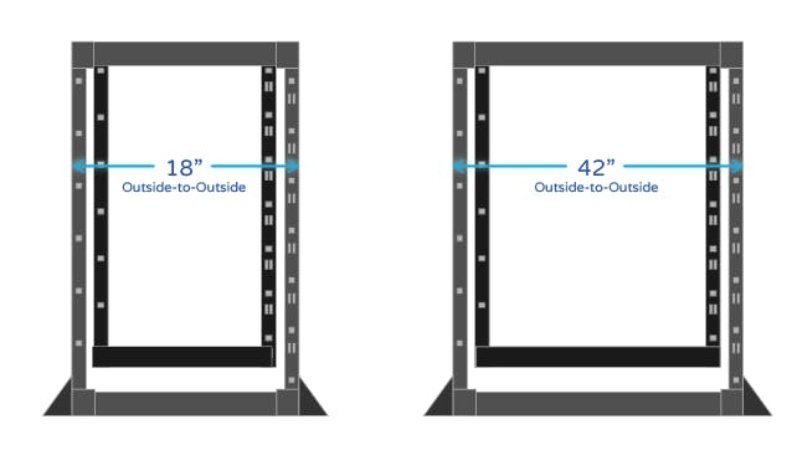
In today’s digital world, businesses rely heavily on data centers, networking equipment, and organized cabling systems to keep their operations running smoothly. Whether you manage a corporate IT room, a home lab, or a large-scale data center, choosing the right server rack sizes is an essential part of building a reliable and efficient infrastructure. The size of a server rack not only determines how much equipment it can hold, but also affects cooling, cable management, accessibility, and overall system performance.
From small wall-mounted racks to large enclosed cabinet systems, server rack size selection ensures that your hardware is properly supported and protected. Companies looking to upgrade or optimize their IT infrastructure often turn to trusted suppliers like lianjer.com, who offer a wide range of server racks and professional guidance to help customers choose the best fit for their environment.
This guide explores the most common server rack sizes, their uses, and the factors you should consider before making a purchase.
What Is a Server Rack?
A server rack is a standardized frame or enclosure used to mount, organize, and secure IT equipment such as servers, switches, patch panels, routers, UPS units, and other networking hardware. Most server racks follow industry standards defined by the Electronic Industries Alliance (EIA), ensuring compatibility across manufacturers.
The standard measurement for rack height is the rack unit (abbreviated as U), where:
- 1U = 1.75 inches (44.45 mm) in height
Server rack sizes are typically described by:
- Height (in U)
- Width (in standardized dimensions)
- Depth (to accommodate various equipment)
Understanding these dimensions helps businesses select the right rack for their equipment, space, and cooling requirements.
Standard Server Rack Heights
Server racks are available in a variety of heights. Here are the most common options and their best-use scenarios.
- 6U to 12U Racks — Compact and Space-Saving
Smaller racks in the 6U–12U range are ideal for homes, small businesses, and network closets with limited space.
Benefits:
- Perfect for small installations
- Can be wall-mounted or free-standing
- Ideal for small switches, firewalls, patch panels, and compact servers
They offer flexibility without requiring a full room or data center layout.
- 16U to 27U Racks — Mid-Size for Growing Networks
These racks accommodate moderate network loads and are often used in small to medium-sized offices.
You can store:
- Modular servers
- Rack-mount UPS units
- Cable management systems
- Network switches
Mid-size server rack sizes deliver a balance of space and accessibility without being too large.
- 42U Racks — Industry Standard
The 42U rack is the most widely used server rack size in data centers and professional IT environments.
Why 42U is popular:
- Offers enough vertical space for full-size servers
- Provides excellent cable routing options
- Compatible with the majority of enterprise hardware
Most data centers use 42U as their default because it maximizes space while maintaining easy access to equipment.
- 45U and 48U Racks — High-Capacity Solutions
For large-scale IT infrastructure, higher racks such as 45U and 48U allow more equipment in the same footprint.
Key advantages include:
- Increased density
- Less floor space required
- Better for environments with strict expansion requirements
However, they require proper cooling, cable management, and stable floors due to their height and weight.
Server Rack Widths
While rack height varies widely, width is more standardized. The most common width in the industry is:
- 19-inch rack width
This measurement refers to the equipment mounting rails, not the outer dimensions. The 19-inch standard accommodates servers, switches, and most rack-mountable equipment.
Other widths include:
- 23-inch racks — used in telecom environments
- 10-inch racks — used for compact networking setups
Most businesses prefer the 19-inch standard due to universal compatibility. Companies like lianjer.com offer a variety of racks with the standard width for seamless integration with modern hardware.
Server Rack Depths
The depth of a server rack is crucial because it determines what servers and equipment can be installed. Common rack depth options include:
- 600 mm (23.6 inches)
Suitable for shallow equipment such as patch panels and small switches. These are often used in network closets.
- 800 mm (31.5 inches)
A mid-range option ideal for combined network and server installations.
- 1000 mm (39.4 inches)
Ideal for full-sized servers, cable management accessories, and deeper components.
- 1200 mm (47.2 inches)
Common in enterprise data centers with advanced cooling and cable needs.
Choosing the right depth is essential, as using a shallow rack for a deep server can cause airflow problems, cable clutter, or inability to close the front and rear doors.
Types of Server Racks by Size and Function
Server racks are not only differentiated by size but also by functionality. Here are some popular types:
- Open-Frame Racks
These racks have no doors or side panels.
Advantages:
- Easy access
- Excellent airflow
- Cost-effective
They are commonly used in secure environments or network labs.
- Enclosed or Cabinet Racks
Enclosed racks offer higher protection for sensitive equipment.
Features include:
- Lockable doors
- Side panels
- Better cable organization
These are essential for businesses that require physical security and controlled airflow.
- Wall-Mount Racks
Ideal for small spaces, offices, and network rooms.
Best for:
- Patch panels
- Switches
- Small UPS units
They are available in sizes like 6U, 9U, and 12U.
- Portable Racks
Used during events, field deployments, and on-site installations.
These racks are often shock-proof and built for mobility.
How to Choose the Right Server Rack Size
Selecting the ideal rack involves more than just measuring space. Consider the following:
- Equipment Size and Growth Plans
Calculate the total U-height of your equipment and add extra space for future expansions.
- Cooling Requirements
Proper airflow is essential—especially for densely packed racks.
- Choose deeper racks for better cable and airflow management
- Ensure front-to-back airflow matches your equipment’s design
- Cable Management Needs
Racks with more depth and height allow better cable routing, reducing clutter and improving cooling performance.
- Space Availability
Measure your room carefully:
- Ceiling height
- Floor strength
- Door clearance
- Aisle spacing
Large racks like 42U or 48U require room to move and access both front and rear.
- Security Level
If the environment is not secured, choose enclosed racks with locking panels and doors.
Conclusion
Understanding server rack sizes is essential for building a safe, reliable, and scalable IT environment. From compact 6U wall-mount racks to large 48U enterprise enclosures, each size plays a unique role in supporting modern technology. By selecting the right height, width, and depth, businesses can optimize cooling, simplify cable management, and prepare for future growth.
For organizations seeking durable, high-quality racks, suppliers like lianjer.com offer an extensive range of solutions for data centers, offices, and industrial environments. Choosing the right rack size today ensures long-term performance and efficiency for all your IT equipment. At Disquantified.com, we believe that true creativity starts with the heart, and when shared with purpose, it can leave a lasting mark.