
Daily commuting places unique demands on a vehicle. It must be efficient enough to keep fuel costs low, comfortable enough to reduce fatigue, and reliable enough to perform consistently in changing traffic conditions. In 2026, Mitsubishi continues to focus on practical engineering and smart safety technology that supports everyday drivers. While many people begin their research by browsing available models from a Mitsubishi dealer in Virginia, the most important step is understanding which vehicle best matches your routine and expectations. Below are five Mitsubishi vehicles that stand out as dependable choices for daily commuting, based on economy, comfort, safety, and overall usability.
1. Mitsubishi Outlander (Mild-Hybrid)
The 2026 Mitsubishi Outlander introduces a mild-hybrid system designed to improve efficiency and smoothness during regular driving. Instead of running entirely on battery power, this system supports the gasoline engine by assisting during acceleration and capturing energy while braking. This is especially helpful in stop-and-go traffic, where frequent slowing and restarting can increase fuel consumption.
One of the Outlander’s biggest strengths is interior flexibility. With three rows of seating, it accommodates both passengers and cargo without feeling cramped. The cabin design focuses on comfort, with supportive seats, clear digital displays, and smartphone connectivity that allows drivers to use navigation and music apps safely. Multi-zone climate control helps maintain comfort for everyone during longer daily trips.
Safety features are another strong point. Many trims include forward collision mitigation, lane departure alerts, and adaptive cruise control. These systems help reduce the mental workload of driving, particularly during repetitive routes where attention can fade over time. The Outlander suits commuters who want space, comfort, and modern driver assistance without sacrificing efficiency.
2. Mitsubishi Outlander Plug-in Hybrid (PHEV)
For drivers looking to reduce fuel use without switching fully to electric driving, the Outlander PHEV offers an effective middle ground. It allows short daily trips to be completed using electric power alone, while the gasoline engine remains available for longer distances. This setup is especially useful for commuters whose routines involve predictable daily travel.
Electric operation is quiet and smooth, which can make traffic feel less stressful. When the battery is depleted, the vehicle automatically transitions to hybrid mode, so drivers do not need to change driving habits or plan routes around charging availability. This flexibility makes the PHEV suitable for both daily routines and unexpected longer trips.
The dual-motor design also contributes to stable handling and responsive acceleration. This helps maintain control in varied driving conditions and improves confidence when merging or navigating busy roads. For drivers who want to reduce environmental impact while keeping convenience, the Outlander PHEV offers a practical solution for everyday use.
3. Mitsubishi Eclipse Cross
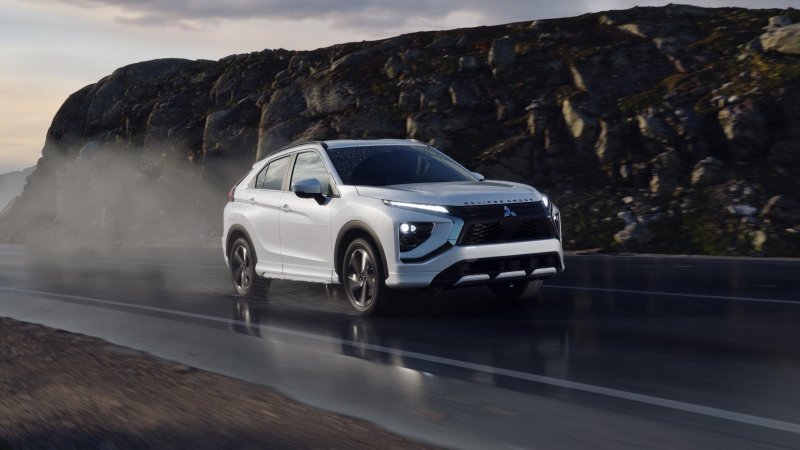
The Mitsubishi Eclipse Cross is aimed at drivers who want a more engaging driving experience while keeping everyday practicality. Its turbocharged engine provides a strong response during acceleration, which is helpful for city driving and highway merging.
The compact body size makes it easier to handle in crowded areas and tight parking spaces. This can be a major advantage for commuters who regularly deal with limited parking or narrow streets. Inside, the cabin design focuses on driver accessibility, with easy-to-reach controls and a central touchscreen for navigation and media.
Safety features help monitor surrounding traffic and alert drivers to potential hazards. Combined with a suspension system tuned for comfort, the Eclipse Cross manages to balance sporty handling with smooth daily performance. It suits drivers who want something more dynamic than a traditional commuter car while still prioritizing comfort and efficiency.
4. Mitsubishi Mirage
The Mitsubishi Mirage remains one of the most economical non-hybrid vehicles available. Its lightweight construction and efficient engine allow it to achieve excellent fuel economy, making it ideal for drivers who prioritize low running costs.
Despite its compact size, the Mirage includes modern infotainment features such as touchscreen displays and smartphone integration. These features help drivers stay connected without relying on handheld devices. The small turning radius also makes it easy to maneuver through crowded streets and parking areas.
Maintenance needs are generally low, and the simple mechanical design supports long-term reliability. For drivers who want straightforward transportation without unnecessary complexity, the Mirage offers dependable performance for everyday travel.
5. Mitsubishi Mirage G4
The Mirage G4 provides the same efficiency advantages as the Mirage hatchback but in a sedan body style. This offers a traditional trunk for enclosed cargo storage, which can be useful for drivers who carry work items or personal belongings regularly.
The sedan structure can also improve stability at higher speeds, making longer daily drives more comfortable. Technology features remain practical and user-friendly, focusing on essential connectivity and clear displays rather than advanced luxury options.
Like the Mirage, the G4 emphasizes affordability and simplicity. It is well-suited for drivers who want consistent efficiency and low ownership costs without giving up basic comfort and safety features.
Why Safety Technology Matters for Daily Drivers
Daily commuting often involves repetitive driving patterns that can lead to reduced alertness. Driver-assistance systems help reduce risk by monitoring surroundings and providing warnings when potential hazards are detected. Features such as automatic emergency braking, lane departure alerts, and adaptive cruise control support safer driving behavior without taking full control away from the driver.
These technologies are especially helpful during heavy traffic, sudden stops, or long highway stretches where maintaining consistent speed and spacing can become tiring. While no system replaces careful driving, modern safety tools act as additional layers of protection during routine travel.
Comfort also plays a major role in daily satisfaction. Supportive seating, quiet cabins, and climate control systems help reduce physical strain. Over time, these small improvements can make a significant difference in how drivers feel during and after their daily trips.
How to Choose the Best Mitsubishi for Your Routine
Selecting the right daily commuting vehicle depends on matching features with real-world needs. Drivers who focus on maximum fuel savings may prefer the Mirage or Mirage G4. Those who require more passenger space and cargo flexibility may find the Outlander or Outlander PHEV more suitable. Drivers who want a compact size with stronger performance may prefer the Eclipse Cross.
Other factors to consider include typical trip length, frequency of passengers, comfort expectations, and long-term operating costs. Thinking about these practical elements helps ensure that the vehicle supports daily life rather than becoming a source of inconvenience.
Modern commuting is not just about getting from one place to another. It involves comfort, efficiency, and confidence in the vehicle’s ability to perform consistently. Mitsubishi’s 2026 lineup reflects this understanding by offering multiple options designed for different lifestyles while maintaining strong reliability and safety standards. At Disquantified.com, we believe that true creativity starts with the heart, and when shared with purpose, it can leave a lasting mark.