
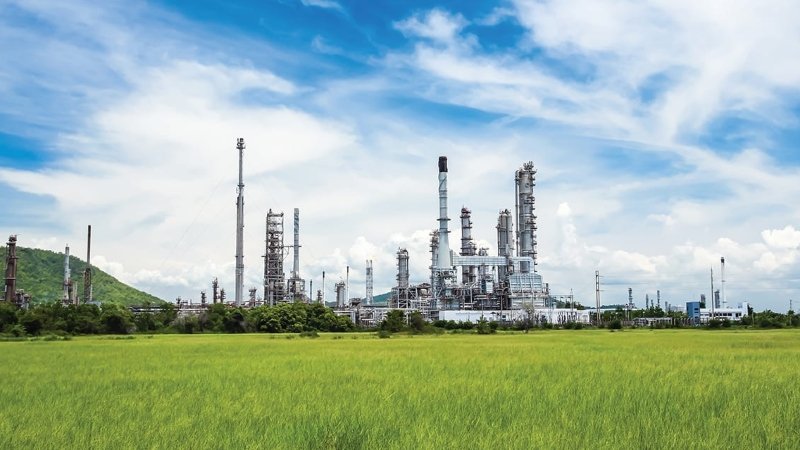
Sustainability has moved from a secondary concern to a core priority for Manufacturing and Infrastructure planners facing rising energy costs, tighter regulations, and growing customer expectations. Industrial sectors account for a significant share of global resource use, which means even modest efficiency gains can produce a meaningful impact.
At the same time, companies are recognizing that smarter resource management often improves reliability and long-term profitability. If cleaner operations can also reduce operating expenses, why would organizations delay the shift? The conversation is no longer about whether sustainability matters, but how quickly practical improvements can be implemented.
What Sustainability Really Means in Today’s Industrial World
In industrial settings, sustainability has moved far beyond marketing language and into measurable performance metrics. Companies are increasingly expected to reduce emissions, manage resources responsibly, and maintain reliable operations at the same time.
This creates a balancing act between environmental goals, operational efficiency, and long-term cost control. Rather than focusing on a single improvement, many organizations are now evaluating the full lifecycle of their products and facilities.
This broader view often reveals that sustainable practices can also improve the bottom line. When manufacturers reduce energy waste or extend equipment life, they typically lower operating costs while shrinking their environmental footprint.
What used to be seen as a trade-off is now often a dual benefit. The key shift is that sustainability is becoming embedded in everyday decision-making rather than treated as a standalone initiative.
Better Materials Are Changing How Things Get Built
Material innovation is quietly transforming both manufacturing and infrastructure projects. Recycled metals, lower-carbon concrete mixes, and engineered composites are becoming more common as industries look for ways to reduce embedded emissions.
These materials often maintain comparable strength and durability while lowering environmental impact. In transportation and heavy equipment, lightweight materials are also helping improve fuel efficiency and overall performance.
However, adoption is not always straightforward. Some companies still face higher upfront costs, inconsistent supply, or uncertainty around long-term performance standards. Should organizations switch materials quickly or move more cautiously based on testing and availability?
Many are taking a phased approach, introducing greener materials where performance is well proven. Over time, as supply chains mature and standards tighten, these materials are likely to become the default rather than the exception.
Energy Efficiency is The Low-Hanging Fruit for Most Facilities
Energy efficiency remains one of the fastest and most cost-effective ways to improve sustainability. Many industrial facilities still operate with aging motors, compressed air systems, and thermal processes that consume more energy than necessary.
Upgrading to high-efficiency equipment, installing variable frequency drives, and optimizing process controls can deliver immediate savings. In many cases, these improvements pay for themselves within a relatively short period.
Another major opportunity lies in visibility. When facilities implement continuous energy monitoring, they often uncover hidden inefficiencies that were previously overlooked. Where is energy being wasted during idle periods, and how much heat is simply vented into the air?
Waste heat recovery systems and smarter scheduling can significantly reduce total energy demand. For organizations looking for practical wins, efficiency improvements usually provide the clearest starting point.
The Push Toward Electrification and Cleaner Power
Electrification is gaining momentum as industries look to reduce reliance on fuel-based processes. Electric boilers, induction heating, and electrified vehicle fleets are becoming more common in sectors where the technology is mature.
At the same time, many facilities are supplementing grid power with on-site renewable generation. Solar arrays, small wind installations, and hybrid energy systems are helping reduce both emissions and exposure to energy price volatility.
Still, the transition is not uniform across all industries or regions. Grid capacity constraints, intermittency concerns, and capital costs can slow adoption in energy-intensive sectors. Should companies electrify everything immediately or prioritize the most practical applications first?
Most are choosing targeted electrification combined with a diversified energy mix. This balanced approach reflects the reality that cleaner power systems are evolving but not yet universally sufficient.
Building Infrastructure That Lasts Longer and Performs Better
Sustainable infrastructure increasingly focuses on durability and lifecycle performance rather than just initial construction cost. Roads, bridges, and industrial facilities are being designed to withstand heavier use and more extreme weather conditions.
This reduces the frequency of repairs and the associated material and energy consumption. Performance-based design standards are also encouraging planners to think decades ahead instead of focusing only on short-term budgets.
Smart systems are playing a growing role as well. Traffic management technology can reduce congestion and emissions in busy corridors, while modern water management systems help cities handle flooding and drought more effectively.
What good is a low-cost project if it requires constant repair and early replacement? Long-term thinking is gradually gaining traction among both public agencies and private developers. The result is infrastructure that performs more reliably while consuming fewer resources over time, particularly when supported by properly specified components such as industrial-grade filtration systems like Indufil filters.
The Circular Economy is Moving From Theory to Practice
The circular economy concept is becoming more practical as companies look for ways to reduce waste and recover value. Manufacturers are increasingly designing products that can be repaired, refurbished, or remanufactured instead of discarded.
In some industrial sectors, byproducts that were once treated as waste are now being reused as inputs for other processes. This shift reduces raw material demand while lowering disposal costs.
Despite the progress, scaling circular systems remains complex. Logistics, product design limitations, and uneven economic incentives can slow adoption. Who is responsible for collecting and reprocessing materials once products reach the end of life?
Many organizations are experimenting with take-back programs and improved supply chain tracking to close these gaps. As data visibility improves and regulations evolve, circular practices are expected to expand further.
How Digital Technology is Making Operations Leaner
Digital tools are becoming central to modern sustainability efforts because they improve visibility and decision-making. Industrial sensors and connected equipment now provide real-time data on energy use, material flow, and equipment health.
This allows operators to identify inefficiencies much earlier than in the past. Predictive maintenance, in particular, helps prevent unexpected failures that often lead to wasted materials and emergency repairs.
Advanced analytics and simulation tools are also improving planning. Digital twins allow engineers to model infrastructure performance before construction begins, reducing costly redesigns and overbuilding.
But increased connectivity introduces new responsibilities. How much data is too much, and are systems adequately protected from cyber risks? Organizations that pair digital adoption with strong data governance tend to capture the greatest long-term value.
What’s Still Holding Many Companies Back
Despite strong momentum, several barriers continue to slow widespread adoption. High upfront capital costs remain one of the most common concerns, particularly for smaller operators.
Many facilities are also working with legacy equipment that cannot easily integrate with modern efficiency or monitoring systems. These practical constraints often force companies to prioritize incremental upgrades rather than large-scale transformation.
There is also the challenge of separating meaningful progress from superficial claims. With sustainability becoming a competitive talking point, the risk of greenwashing has grown. How can stakeholders distinguish between measurable improvements and marketing-driven narratives?
Clear metrics, transparent reporting, and third-party verification are becoming increasingly important. Organizations that focus on verifiable outcomes are more likely to build lasting credibility in this evolving landscape.
Conclusion
Manufacturing and infrastructure are gradually shifting toward more sustainable models through better materials, smarter energy use, digital visibility, and longer-lasting design strategies. Progress is rarely driven by a single breakthrough. It usually comes from steady, measurable improvements across equipment, processes, and workforce capabilities.
Organizations that approach sustainability pragmatically tend to see both environmental and financial benefits over time. The real question is not whether change is coming, but which companies will adapt early enough to capture the advantage. Those that align efficiency, resilience, and responsible resource use are likely to be better positioned for the demands of the next industrial era. At Disquantified.com, we believe that true creativity starts with the heart. And when shared with purpose, it can leave a lasting mark.