
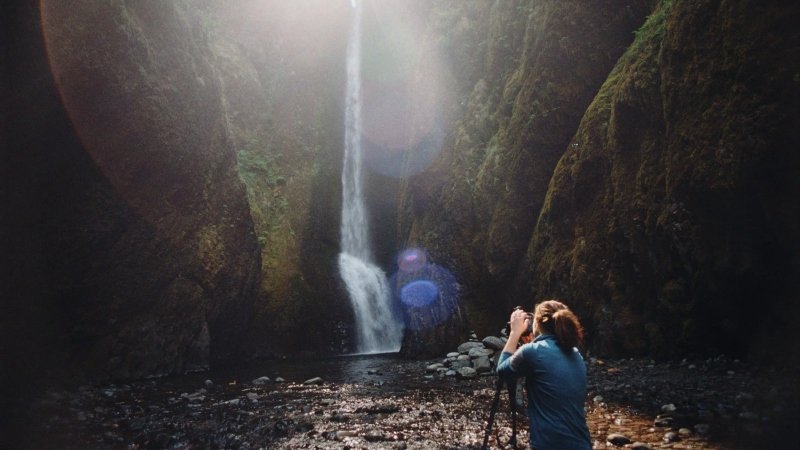
For many travelers, social media has replaced the glossy travel brochures of the past and, increasingly, even tourism websites. And while we have learned not to completely trust those perfect Instagram photos and cleverly produced TikToks, the chances are good you’ve spent a few minutes – or hours – scrolling and mentally adding new “hidden gems” and “secret spots” to your travel wish list.
When Social Media Fame Helps – and When It Hurts
Social media has helped people discover incredible places they might never have found otherwise. And sometimes, the attention can benefit a location. Consider Giethoorn, Netherlands: the little “carless” town with its Insta-worthy canals and bridges was struggling until it became a viral destination. Now, local businesses there are thriving.
But social media fame isn’t always a gift, especially for fragile natural places. In 2025, The Guardian reported that officials in Spain’s Balearic Islands removed images of Caló des Moro and the Es Vedrà lookout from local tourism websites after both locations were overwhelmed by visitors. The irony is that tourism officials had originally worked with influencers to promote those sites in hopes of drawing people away from other spots. Instead, the plan massively backfired.
A lot of the attention starts with something as simple as a tagged photo.
What Geotagging Does
Geotagging is simply adding location information to digital content. Sometimes people intentionally tag that cool beach or secluded hiking trail in their posts. Other times, it happens automatically when our phones embed GPS data in our photos and videos. Either way, location information makes finding off-the-beaten-path spots easier than ever.
And that’s where things can get messy.
When geotagging exposes unprepared areas to large and sudden waves of visitors, unmanaged crowds can damage delicate habitats and disturb wildlife. Litter increases when there aren’t enough trash cans. Erosion may start or worsen, which can be dangerous for visitors and locals alike. If a quiet cove or scenic overlook gets shared often enough, trails get wider, and roads clog with traffic. If the overcrowding continues, the place eventually loses the magic that people originally came there to enjoy. A glance at Fodor’s annual “No List” highlights just a few of the natural places damaged by overtourism – or in danger of it – including Spain’s Canary Islands, Glacier National Park in Montana, and the entire continent of Antarctica.
The Case for Digital Silence
This tension between our desire to document our travels and the potentially devastating impact of geotagging is one reason a new travel ethic is starting to catch on: Digital Silence. The idea is very simple: share your experience of a desirable place without automatically sharing its exact coordinates. The travelers embracing this cousin of the “leave no trace” movement don’t see it as being secretive or gatekeeping; instead, they see it as a responsible way to protect places that can’t deal with huge numbers of visitors.
To be fair, geotagging isn’t always bad. It can make travel more inclusive and accessible, as well as easier to navigate. It helps us plan routes and discover the places that genuinely want visitors. The problem isn’t the location data itself—it’s using it carelessly.
Digital Silence offers a sustainable middle ground. At its core, it means protecting the beauty and essence of a locale instead of turning it into a viral destination.
What Responsible Sharing Can Look Like
In practice, Digital Silence can be pretty simple:
- Use broader location tags instead of exact geotags for fragile places.
- Don’t reveal lesser-known sites without the infrastructure to handle crowds.
- Wait until after you leave to post if real-time attention could create congestion.
- Follow Leave No Trace principles and think about whether your content encourages other people to respect the place, too.
- Turn off automatic geotagging in your smartphone images and videos.
Staying Connected Without Broadcasting Everything
Being thoughtful online doesn’t mean disconnecting completely. Most of us still rely on our phones for maps, weather, translation apps, and other travel necessities. An eSIM makes that easy, letting you stay connected to the tools you need without feeling like you must broadcast every exact location in real time.
Share the Wonder, Not Every Coordinate
Responsible travel may require a new discipline: the ability to share experiences without sharing every detail. Some places can handle attention, others can’t. The challenge is learning the difference before love becomes damage. At Disquantified.com, we believe that true creativity starts with the heart. And when shared with purpose, it can leave a lasting mark.