
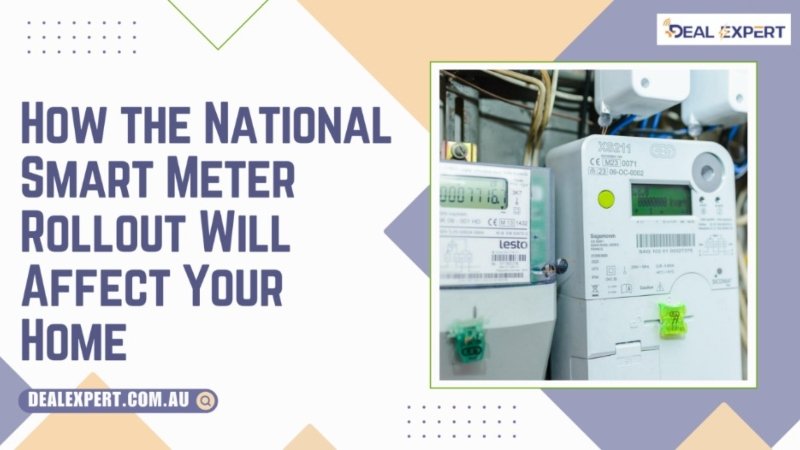
Over 56% of meters in the NEM are already smart meters, with Victoria leading at 99%. The rest of the country is now catching up. Every home in Australia’s National Electricity Market will have a smart meter by November 2030. The Australian Energy Market Commission (AEMC) finalised the rules in late 2024, and the accelerated rollout began in December 2025. This means:
- No more manual meter readings
- No more estimated bills
- Faster connections when switching retailers or moving house
If you are comparing AGL Electricity Plans or other providers right now, the type of meter at your property already affects what plans you can access and how your billing works.
What Exactly Does a Smart Meter Do?
A smart meter is a digital device that records your electricity use in real time, typically in five-minute intervals. That data is sent to your retailer remotely. No one needs to visit your property to take a reading. Here is how smart meters & energy meters compare:
| Feature | Old Meter (Accumulation) | Smart Meter |
| How it reads | Manual visit every 1 to 3 months | Automatic remote reading |
| Billing accuracy | Often estimated between reads | Based on actual five-minute interval data |
| Connection speed | Technician visit required (1 to 3 business days) | Remote activation, often same day |
| Solar monitoring | No export tracking | Tracks exactly when you export and import |
| Time-of-use pricing | Not supported | Fully supported |
| Outage detection | Reported by customers | Detected automatically by the network |
How Will This Change Your Energy Bills?
Smart meters and energy meters unlock time-of-use pricing, where your per-kWh rate varies by time of day.
| Time Period | Typical Rate | When It Applies |
| Peak | Highest rate | Late afternoon to early evening (roughly 3 pm to 9 pm) |
| Shoulder | Mid-range rate | Morning and late evening |
| Off-peak | Lowest rate | Overnight (roughly 10 pm to 7 am) and weekends |
If you can shift heavy electricity use to off-peak hours, time-of-use pricing can reduce your bills. Things like running the dishwasher, washing machine, or charging an EV overnight all become cheaper on this structure.
Key protections in place:
- Your retailer cannot switch you to time-of-use pricing without your consent for two years after your smart meter is installed
- Retailers must offer flat-rate alternatives for customers who prefer consistent billing
- You can switch plans at any time if time-of-use pricing doesn’t suit your household
Energy Australia energy plans include both flat-rate and time-of-use options for customers with smart meters. If you are unsure which structure suits your home, start with a flat rate and review your interval data after a few months.
What Does the Rollout Timeline Look Like?
The rollout is happening in stages, coordinated by energy retailers and distributors across all states and territories.
| Phase | Timeframe | What Happens |
| Rule implementation begins | December 2024 | AEMC rules take effect, framework set up |
| Accelerated rollout starts | December 2025 | Retailers begin coordinated deployment area by area |
| Deployment infrastructure in place | July 2026 | Most rollout systems and scheduling are operational |
| Full coverage target | 30 November 2030 | All NEM customers to have a smart meter |
Where each state sits right now:
| State | Smart Meter Penetration |
| Victoria | 99% |
| South Australia | ~50% |
| Queensland | ~45% |
| ACT | ~40% |
| New South Wales | ~39% |
When it is your turn, your retailer will contact you by letter, text, or email to arrange the installation. For most homes, it is a simple swap that takes about 30 minutes. Your power may be off briefly during the changeover. In South Australia, SA Power Networks is coordinating the rollout under the same national timeline. The SA Government’s energy site has the full details. If you are an SA customer waiting for your smart meter installation in SA, your retailer will reach out when your area is scheduled.
Does It Cost Anything?
The smart meter swap itself comes at no upfront cost to the homeowner. Your retailer covers the installation as part of the national rollout.
One thing to be aware of: if the technician arrives and finds safety issues with your existing meter box, those repairs must be completed before the new meter can be installed.
| Issue Found | Who Pays |
|
| Old or damaged wiring | Property owner | Yes, but old meter stays until it fails |
| Asbestos in meter box | Property owner | Yes, but old meter stays until it fails |
| Damaged or weathered cover | Property owner | Yes, but old meter stays until it fails |
| Renter’s property | The landlord is responsible | The landlord decides |
What About Privacy?
This is one of the most common concerns. Here is what smart meters do and do not track.
What they track:
- Total electricity consumption in intervals throughout the day
- When you draw power from the grid
- When you export solar to the grid
What they do not track:
- Which appliances you are using
- What you are doing inside your home
- Any personal activity or behaviour
The data is used for billing and network management. Your retailer can see your usage patterns (peak vs off-peak, daytime vs evening), but that is the extent of it.
How Does This Affect Solar and Battery Owners?
If you have rooftop solar, a smart meter is a significant upgrade. Old meters often could not accurately track how much power you exported versus how much you consumed.
With a smart meter, solar and battery households get:
- Accurate feed-in tariff credits based on actual exports, not estimates
- Real-time tracking of when your battery charges and discharges
- Data to help you decide the best time to use stored energy vs grid power
- Access to plans with higher feed-in tariffs that require interval metering
Alinta Energy Plans offer flexible month-to-month arrangements with no lock-in contracts, which suit households still fine-tuning their solar and battery setup. Once you have a few months of smart meter data, you can see exactly how your household uses energy and switch to a plan that matches your patterns.
What Happens When You Move House?
This is where smart meters make the biggest practical difference.
| Scenario | Old Meter | Smart Meter |
| Connection timeframe | 1 to 3 business days (technician visit) | Same day (remote activation) |
| Switching retailers during move | Separate process, extra wait | Seamless, done remotely |
| After-hours activation | Not possible | Available with some retailers |
The rollout also means that the old process of needing an electricity smart meter technician visit for every house move will gradually disappear. By 2030, remote connections will be the standard across the country. If you need an urgent electricity connection at a new property that already has a smart meter, calling your retailer before 1 pm usually gets you same-day activation.
Wrapping Up
Australia is rolling out smart meters nationwide by 2030, replacing manual readings with remote, real-time electricity tracking. This enables faster connections, more accurate billing, and access to time-of-use pricing, with most homes receiving their new meter at no upfront cost. At Disquantified.com, we believe that true creativity starts with the heart. And when shared with purpose, it can leave a lasting mark.
Frequently Asked Questions
Q: Do I have to get a smart meter?
Yes. As of December 2025, customers can no longer refuse a smart meter installation under the national rollout rules. The rollout is mandatory across all NEM states and territories, with a completion target of November 2030.
Q: Will a smart meter make my bills go up?
Not automatically. Your retailer cannot change your tariff structure for two years after installation without your consent. Flat-rate plans remain available. If you switch to time-of-use pricing and shift heavy usage to off-peak hours, your bills could actually go down.
Q: When will I get my smart meter?
It depends on your state and distributor area. Your retailer will contact you when it is your turn. Victoria is already at 99% coverage. NSW, QLD, SA, and ACT are rolling out through to 2030.
Q: What if my meter box needs repairs?
If the technician finds safety issues (old wiring, asbestos, damaged cover), those need to be fixed before the smart meter can be installed. Property owners cover the repair cost. You can decline the repairs and keep your old meter until it fails.
Q: Can I switch energy plans after getting a smart meter?
Yes. A smart meter gives you access to a wider range of plans, including time-of-use and demand tariffs. Alinta Energy plans and other major retailers offer multiple plan types for smart meter customers. You can switch at any time.