
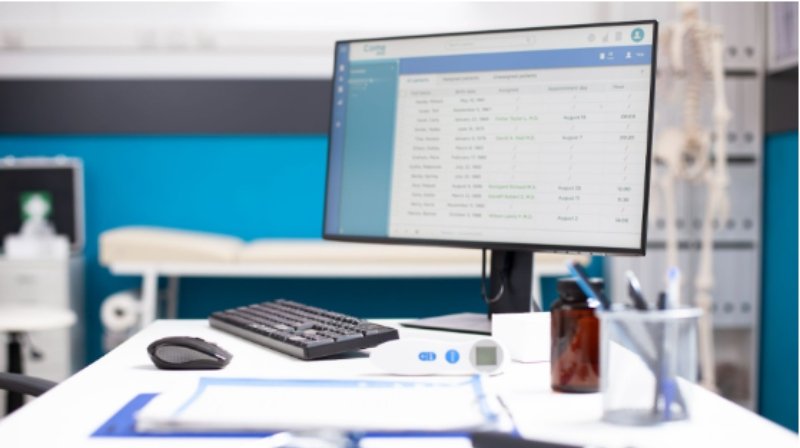
Healthcare record systems are more than digital filing cabinets. In 2026, they’re the operational spine holding together safe care, accurate reimbursements, and real-time clinical decisions. Every telehealth visit, AI-assisted diagnosis, and value-based payment model runs on the assumption that the right data exists, and that someone can actually find it.
Understanding the landscape of types of medical record systems, paper, EMR, EHR, PHR, and enterprise electronic health record systems, isn’t academic. It directly shapes quality scores, patient safety, and whether your practice runs smoothly or constantly plays catch-up.
The CDC’s 2024 National Electronic Health Records Survey puts things in sharp relief: 95.0% of U.S. office-based physicians had adopted electronic health record systems, with 83.6% using a certified EHR. That means the question today isn’t paper versus digital. That debate is settled. The real question is whether your system configuration is the right one, and whether your team actually understands what they’re buying.
The Core Landscape of Healthcare Record Systems Used Today
Decades of overlapping technology investments, shifting regulatory demands, and evolving clinical needs have produced a genuinely mixed ecosystem. No single system type dominates across every setting, and that’s by design.
Most clinicians use “EHR” and “EMR” as synonyms. Honestly? That’s understandable, the marketing materials don’t help. The difference between EHRs and EMRs carries real consequences for implementation planning, contract negotiations, and long-term interoperability.
Scope and Ownership of Data
Think of an EMR as a digitized paper chart that never leaves the building. It handles clinical documentation, problem lists, medications, and billing within a single clinic or hospital. An EHR is something fundamentally different, a longitudinal record designed to follow patients across multiple organizations and care episodes over time.
Interoperability and Data Sharing
Here’s where architecture comes in. EMRs stop at the organization’s boundary. Modern electronic health record systems use FHIR APIs to exchange data with external providers, payers, and patient-facing apps. That’s not just a branding difference, it’s a completely different infrastructure philosophy.
Use Cases in 2026
EMRs still make sense for small single-specialty practices where cross-organization sharing isn’t a daily operational requirement. EHRs have become standard across IDNs, ACOs, and national health systems where care coordination is central to everything.
Knowing which category your organization actually belongs to saves enormous time during vendor selection.
| System Type | Most Common Setting | Digitization Level | Primary Purpose |
| Paper-based records | Solo practices, rural clinics | None | Clinical documentation |
| On-premise EMR | Single-specialty practices | High | Clinical care, billing |
| Cloud-based EHR | Health systems, IDNs | High | Care coordination, analytics |
| Hybrid paper–electronic | Transitioning organizations | Medium | Mixed workflows |
| PHR portals & apps | Patient-facing | High | Self-management, access |
| Specialty registries | Public health, oncology | Variable | Population health |
A solo practice and an integrated delivery network have almost nothing in common when it comes to record-keeping needs. The solo practice might function perfectly well with a lean on-premise EMR. The IDN absolutely cannot. Matching system type to operational reality is where smart buyers start.
Paper Medical Records in a Digital World
Paper hasn’t gone anywhere. That might surprise you, but solo practices, behavioral health providers, and rural clinics still depend heavily on physical charts, for a mix of cost, habit, and infrastructure reasons.
Electronic Medical Records vs Paper in Daily Practice
Compare electronic medical records vs paper side by side and the gaps appear quickly. Digital records are searchable, legible, and survive floods. Paper charts require manual retrieval, can’t generate automated alerts, and become genuine liabilities during audits. The documentation completeness difference alone is significant.
Where Paper Persists Alongside Digital
Even fully digitized organizations haven’t eliminated paper entirely. Consent forms, scanned external records, and downtime workflows keep physical documents in circulation. It’s a hybrid reality most clinical teams manage every single day, whether they acknowledge it explicitly or not.
Modern Electronic Medical Record (EMR) Systems
Today’s patient medical record software has matured well beyond basic charting. Even standalone EMRs now include e-prescribing, order entry, and billing code suggestions as standard features, functionality that would have felt ambitious a decade ago.
Key Features of Contemporary EMRs
Encounter notes, problem lists, allergies, and medications remain the foundation. But strong modern platforms also handle lab orders, referral tracking, and scheduling integration without requiring separate software purchases or awkward workarounds.
Niche and Specialty EMRs
Mental health, dental, ophthalmology, and fertility clinics each have workflows that generic systems simply can’t accommodate cleanly. A non-specialized platform forces documentation workarounds that slow clinicians and quietly introduce errors. Specialty EMRs build clinical logic around how care actually happens in those settings, and the difference in daily usability is noticeable.
Integration with Other Healthcare Information Systems
Lab systems, radiology platforms, and billing tools all need clean connections to your core record system. The organizations that treat integration as a core requirement from day one, rather than an afterthought after go-live, consistently report smoother implementations.
AI-Enabled Workflows and the Future of EHR Documentation
This is where things get genuinely exciting. Research published in JAMA Network Open (August 2025) found that ambient documentation technology was associated with a 21.2% absolute reduction in burnout prevalence at Mass General Brigham. That’s not a marginal improvement, that’s a structural shift in how clinicians experience their workdays.
What AI Documentation Tools Actually Do
Ambient scribing, predictive risk scoring, and coding suggestions are increasingly standard inside enterprise EHR platforms. Clinicians speak naturally during encounters, and structured data flows directly into the record. Fewer clicks. Less after-hours charting. More time for actual patient care.
Guardrails Matter Enormously
Bias, explainability, and audit trails aren’t optional extras, they’re non-negotiables. Any AI tool embedded in clinical healthcare information systems needs transparent governance, especially in high-stakes specialties where errors carry serious consequences.
Closing Thoughts on Healthcare Record Systems
Choosing a record system isn’t fundamentally a technology decision. It’s a care delivery decision. Paper works until the liability catches up with you. EMRs handle the day-to-day basics well. Enterprise EHRs and AI-assisted documentation represent where clinical work is genuinely heading.
Start with your actual workflow, not the vendor’s feature list, and build from there. The right system fits your reality today and still leaves room for what care looks like tomorrow. At Disquantified.com, we believe that true creativity starts with the heart. And when shared with purpose, it can leave a lasting mark.
Your Questions About Healthcare Record Systems, Answered
What’s the most common system used in small practices today?
Most small practices use a basic on-premise or cloud-based EMR. These handle documentation, billing, and scheduling without the complexity of enterprise electronic health record systems. Cost and ease of setup drive most decisions at this scale.
Which system works best with limited IT support?
Cloud-based patient medical record software is typically the better fit. Vendors manage servers, updates, and security, your team stays focused on care rather than infrastructure. Strong customer support should be a firm non-negotiable when evaluating options.
How does telehealth data flow into existing EHR systems?
Most enterprise electronic health record systems now integrate telehealth natively or through certified third-party tools. When properly configured, visit notes, vitals, and encounter summaries sync automatically, no manual entry required.