
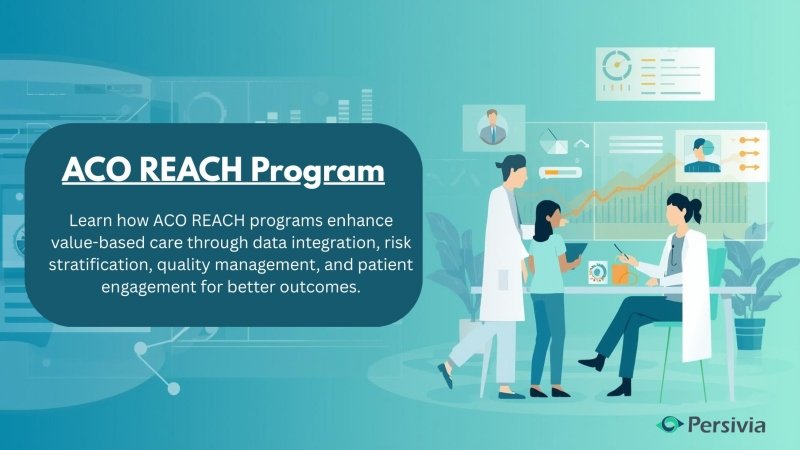
Healthcare institutions face increasing pressure to improve outcomes while managing costs. The ACO REACH Program shifts care toward accountability and shared savings instead of fee-for-service, placing financial responsibility for patient outcomes on participating providers.
Value-based care extends beyond treating disease to include prevention, chronic disease management, and integrated care across multiple settings. ACO REACH models set clear standards for quality, cost management, and patient satisfaction. Participating organizations must align clinical excellence with operational efficiency, using advanced tools to monitor performance, identify gaps, and intervene early.
1. Comprehensive Data Aggregation Drives Informed Decision-Making
Accountable Care Organizations (ACOs) manage thousands of patients across multiple care settings, including primary care offices, specialists, hospitals, labs, and pharmacies. Data aggregation pulls information from hundreds of sources into one unified view, enabling complete visibility into patient health histories and utilization patterns. This consolidated approach eliminates blind spots that lead to duplicate tests, medication errors, and fragmented care.
What role does data aggregation play in ACO REACH performance?
Data aggregation consolidates patient information from multiple sources into a single view, enabling providers to see full health histories and utilization trends. This centralization reduces missed diagnoses, prevents unnecessary hospitalizations, and ensures high-risk patients are flagged early, directly improving patient outcomes.
Integrated data sources include:
- Electronic health records (EHRs)
- Claims databases
- Lab systems
- Pharmacy networks
- Hospital admission records
2. Advanced Risk Stratification Prioritizes High-Impact Interventions
Risk stratification groups patients based on health status, utilization patterns, and projected needs. ACO REACH participants use predictive analytics to identify patients needing intensive support versus those requiring routine preventive care. This is a strategic way of utilizing scarce resources of care management since it targets those who are most likely to develop adverse events or expensive complications.
What is risk stratification in ACO REACH programs?
Risk stratification is used to group patients based on their risk of adverse health events, which enables care teams to allocate resources to patients who require intensive care. Not all patients require the same level of attention. Some manage their conditions effectively, while others face multiple chronic illnesses, social challenges, or frequent hospitalizations.
Patient segments include:
- Low-risk: Stable patients needing routine preventive care
- Medium-risk: Patients with controlled chronic conditions
- High-risk: Patients with multiple comorbidities or recent hospitalizations
- Rising risk: Patients showing early warning signs
Why does targeted intervention matter for value-based performance?
Targeting high-risk patients helps prevent costly complications. For example, proactive monitoring of diabetic patients with heart disease can reduce preventable ER visits by up to 25%, directly improving outcomes and lowering costs.
Accountable Care Organizations ACOs software enables stratification through algorithms that analyze historical data and flag patients needing immediate attention. are managers are given priority worklists ranked by level of risk.
3. Clinical Quality Management Ensures Consistent Evidence-Based Care
Quality management systems monitor provider performance against established clinical standards, ensuring patients receive consistent evidence-based care. The ACO REACH contracts make the quality metric success directly tied to financial rewards, which provides a significant impact of systematic advancements.
How do ACO REACH programs maintain quality standards?
Quality management tracks provider performance against established clinical benchmarks. Value-based contracts have set quality measures that an organization should achieve in order to share savings. Such measures include preventive screening, chronic disease care, and patient experience.
Quality management systems monitor:
- Cancer screening rates (breast, cervical, colorectal)
- Diabetes control (HbA1c testing, eye exams)
- Hypertension management
- Medication reconciliation after discharge
- Patient satisfaction scores
What happens when providers miss quality targets?
Organizations that fail to meet benchmarks face financial penalties and lose shared savings opportunities. Consistently meeting quality targets has been shown to improve chronic disease management outcomes and reduce avoidable hospitalizations by 15–20%
4. Integrated Care Management Enhances Patient Engagement and Transitions
Care management coordinates services across providers and care settings, ensuring patients receive proper follow-up and support. Personalized plans, provider communication, and community resource linkage address both clinical and social determinants of health.
What is care management in ACO REACH programs?
Care coordinators formulate individualized care plans, appointments, and follow-ups while monitoring medication adherence. This structured coordination has been linked to a 30% decrease in readmissions for high-risk populations.
Multichannel engagement reaches patients through:
- Phone calls for complex discussions
- Text messages for appointment reminders
- Patient portals for medical record access
- Telehealth visits for follow-up care
5. Point-of-Care Integration Empowers Real-Time Clinical Decisions
Point-of-care tools deliver actionable patient information directly within provider workflows during appointments. Integration surfaces critical data within the EHR or mobile apps, including risk scores, recent hospitalizations, outstanding quality measures, and care plan goals.
Why does real-time information improve outcomes?
Providers can address issues immediately. For example, identifying overdue lab tests for diabetic patients during the visit allows immediate ordering, reducing delays in treatment and improving health metrics like HbA1c control.
Bottom Line
ACO REACH initiatives shift healthcare organizations from focusing solely on treatment to managing the health of populations. Persivia provides custom-built population health packages to Accountable Care Organizations that are transitioning to value-based care. CareSpace® by Persivia combines AI-driven risk stratification, quality management, and care coordination on a single platform, delivering measurable improvements in patient outcomes, reduced costs, and operational efficiency. At Disquantified.com, we believe that true creativity starts with the heart, and when shared with purpose, it can leave a lasting mark.